
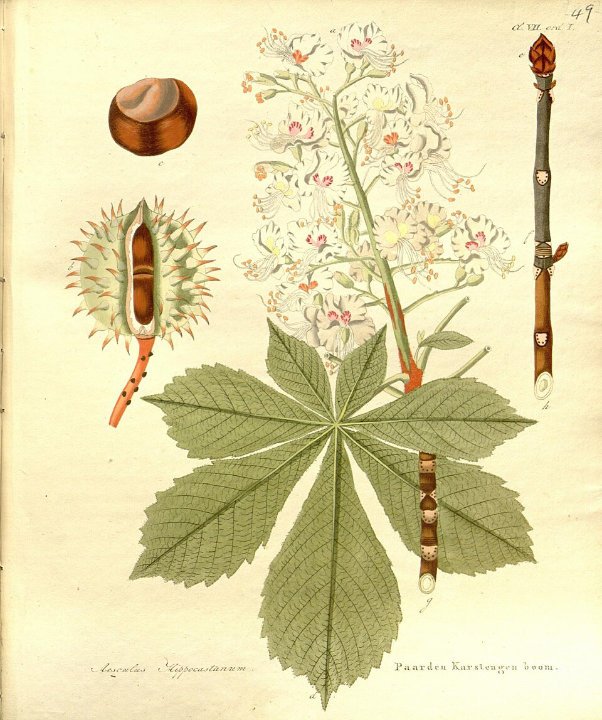
Horse Chestnut
Aesculus hippocastanum L.
Members can save items to My Herbarium
Members can track this on their Apothecary Shelf
Safety Notes
Raw horse chestnut seeds, bark, leaves, and flowers are toxic — they contain esculin, and the FDA classifies horse chestnut as an unsafe herb outside of properly processed, standardized extract. Only commercially standardized seed extract (typically 16-20% aescin), with the toxic component removed during processing, is appropriate for use, and even then only short-term. Horse chestnuts are not the same plant as edible chestnuts (Castanea species) and are never edible in any raw form. Standardized extract carries a mild blood-thinning effect — use caution with anticoagulant medications and stop at least 2 weeks before surgery. Avoid during pregnancy and in anyone with liver conditions unless supervised by a healthcare provider. Possible cross-reactivity in those with a latex or tree-nut allergy.
This is educational information, not medical advice. See our full Disclaimer before use.
Unlock the Full Herbarium
Plant description, traditional uses, preparation notes, related herbs, and full sourcing for Horse Chestnut — plus every herb in the collection — are available to Full Herbarium members.
Become a Member