Gentian
Gentiana lutea L.
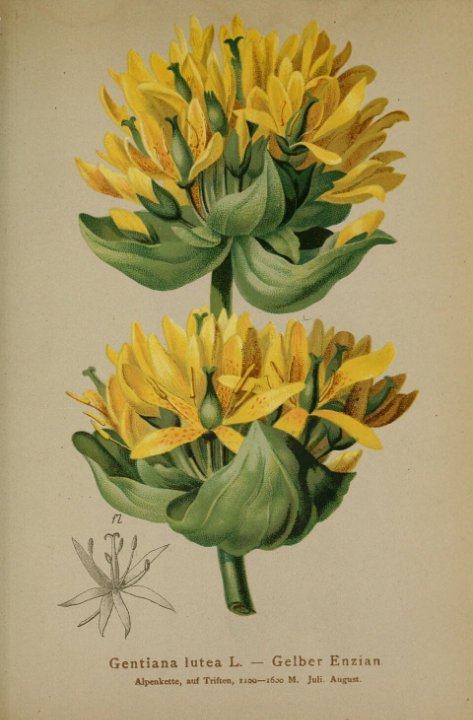
Gentian (Gentiana lutea) is a tall alpine perennial with smooth oval leaves and clusters of bright yellow star-shaped flowers, prized for its thick, intensely bitter root.
Last reviewed August 8, 2026
Members can save items to My Herbarium
Members can track this on their Apothecary Shelf
Is Gentian safe to use?
Contraindicated in active gastric or duodenal ulcers, gastritis, hyperacidity, and GERD — gentian stimulates gastric acid secretion, which can worsen these conditions rather than help them. Avoid during pregnancy (traditional emmenagogue property) and breastfeeding, where safety data is lacking. There is a theoretical risk of increased hypotension when combined with blood pressure medication; stop use at least 2 weeks before surgery. IMPORTANT IDENTIFICATION WARNING: wild gentian can be confused with the highly toxic white hellebore (Veratrum album), which grows in similar alpine habitats and has superficially similar leaves — accidental poisonings have occurred from misidentified homemade preparations. Only use commercially sourced, properly identified gentian root; never wildcraft it yourself.
This is educational information, not medical advice. See our full Disclaimer before use.
Unlock the Full Herbarium
Plant description, traditional uses, preparation notes, and growing guides for Gentian — plus every herb in the collection — are available to Full Herbarium members.
Become a Member Not sure yet? Try the full Herbarium with one recipe.Recipes Featuring Gentian
Related Herbs
More Like This
Used in rituals & traditions
The symbolic and spiritual side of Gentian is kept in the Cauldron:
- Planetary & elemental correspondence
- Folklore & spiritual associations