Myrrh
Commiphora myrrha (Nees) Engl.
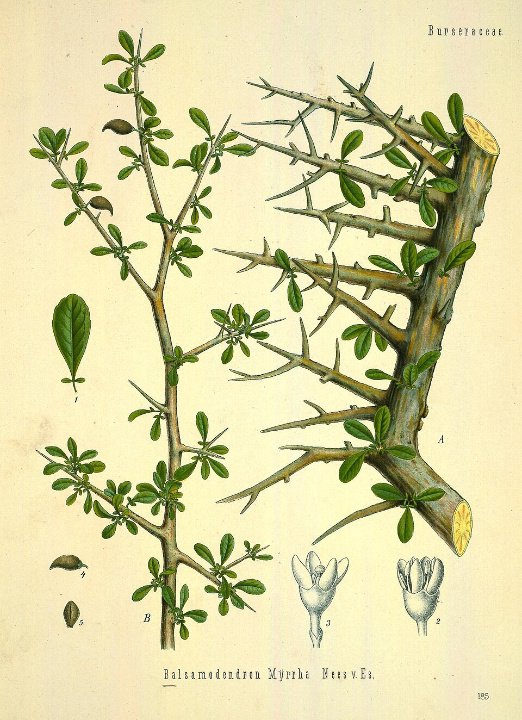
Myrrh (Commiphora myrrha) is a thorny, scrubby tree that yields an aromatic resin when its bark is wounded — the resin hardens into reddish-brown droplets that are collected and dried, much like frankincense from a related genus.
Last reviewed August 8, 2026
Members can save items to My Herbarium
Members can track this on their Apothecary Shelf
Is Myrrh safe to use?
Should be avoided during pregnancy — myrrh has a documented history as a uterine stimulant and has been directly linked to pregnancy complications and miscarriage risk when taken internally in meaningful amounts. Large internal doses (beyond a diluted gargle) can affect heart rate and irritate the kidneys and should be avoided. May affect blood sugar — use caution alongside diabetes medications, and stop use at least two weeks before any scheduled surgery given its effects on blood glucose and clotting.
This is educational information, not medical advice. See our full Disclaimer before use.
Unlock the Full Herbarium
Plant description, traditional uses, preparation notes, and growing guides for Myrrh — plus every herb in the collection — are available to Full Herbarium members.
Become a Member Not sure yet? Try the full Herbarium with one recipe.More Like This
Articles Mentioning This Herb
Used in rituals & traditions
The symbolic and spiritual side of Myrrh is kept in the Cauldron:
- Planetary & elemental correspondence
- Where it appears in the tarot
- Folklore & spiritual associations
- Religious & cultural history
- Rituals & traditions that use it