Arnica
Arnica montana L.
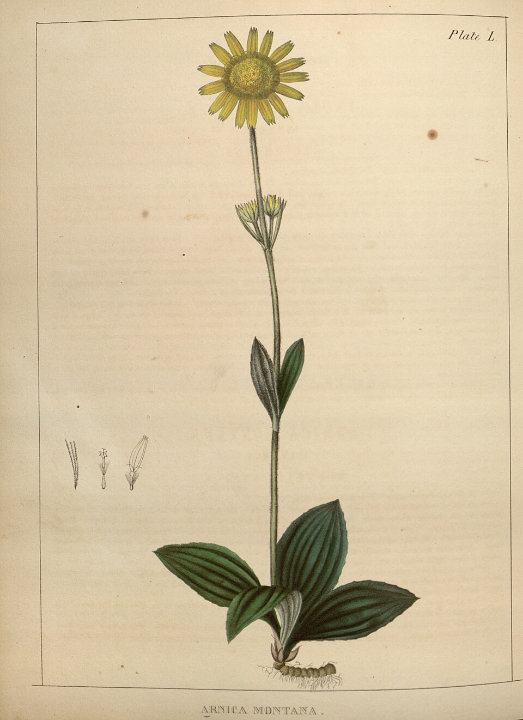
Arnica (Arnica montana) is a perennial alpine plant in the daisy family with large, daisy-like yellow-orange flower heads atop a low rosette of hairy, oval leaves.
Last reviewed August 8, 2026
Members can save items to My Herbarium
Members can track this on their Apothecary Shelf
Is Arnica safe to use?
Arnica is classified as an unsafe herb by the FDA when taken internally and should never be ingested — as little as 30 mL of a 20% tincture taken by mouth can cause serious poisoning, and ingestion has led to fatal gastroenteritis, cardiac and muscle effects, and organ toxicity. Topical use is for intact skin only; never apply to open wounds or broken skin, where it can be absorbed. Prolonged topical use can cause allergic contact dermatitis, and — like Chamomile, Calendula, and Yarrow — Arnica belongs to the Asteraceae (daisy) family, so those with a ragweed or daisy-family allergy should patch-test first. Avoid during pregnancy due to a reported uterine-stimulant and possible abortifacient effect, and do not apply near the nipple while breastfeeding.
This is educational information, not medical advice. See our full Disclaimer before use.
Unlock the Full Herbarium
Plant description, traditional uses, preparation notes, and growing guides for Arnica — plus every herb in the collection — are available to Full Herbarium members.
Become a Member Not sure yet? Try the full Herbarium with one recipe.Recipes Featuring Arnica
Related Herbs
More Like This
Used in rituals & traditions
The symbolic and spiritual side of Arnica is kept in the Cauldron:
- Planetary & elemental correspondence
- Folklore & spiritual associations