
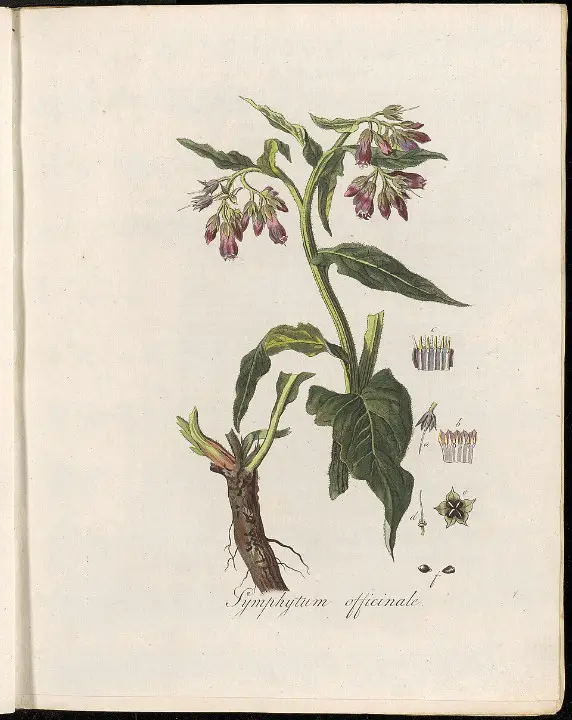
Comfrey
Symphytum officinale
Members can save items to My Herbarium
Members can track this on their Apothecary Shelf
Safety Notes
Do not take internally. Comfrey contains pyrrolizidine alkaloids (PAs), and the FDA advised in 2001 that comfrey supplements intended for internal use be removed from the market following documented cases of liver damage, including hepatic veno-occlusive disease, from oral use. Even topical use should be limited to unbroken, intact skin for short periods — PAs can be absorbed through skin, especially broken skin — and avoided entirely during pregnancy, while nursing, and in children. This herb is included here for reference and identification purposes; Teapotheca does not recommend internal use under any circumstances.
This is educational information, not medical advice. See our full Disclaimer before use.
Unlock the Full Herbarium
Plant description, traditional uses, preparation notes, related herbs, and full sourcing for Comfrey — plus every herb in the collection — are available to Full Herbarium members.
Become a Member