Parsley
Petroselinum crispum (Mill.) Fuss
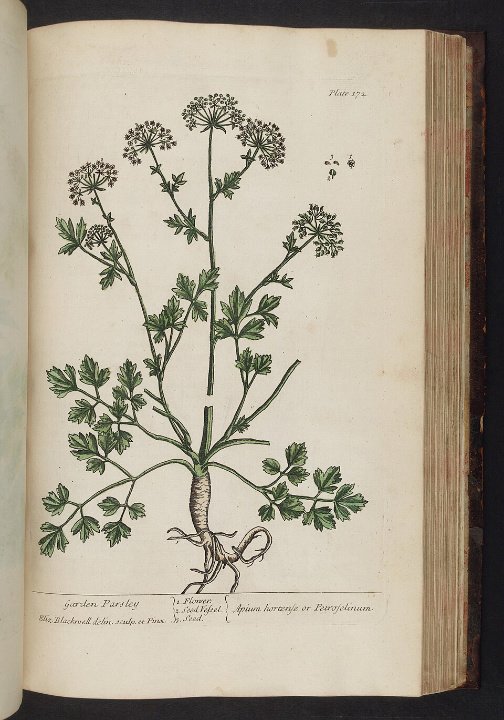
Parsley (Petroselinum crispum) is a biennial culinary herb with bright green, either curly or flat leaves, grown as an annual in most gardens and one of the most widely used culinary herbs worldwide.
Last reviewed October 7, 2026
Members can save items to My Herbarium
Members can track this on their Apothecary Shelf
What is Parsley?
Origin: Mediterranean region
What is Parsley traditionally used for?
Traditionally used as a mild diuretic and digestive aid, and valued for its concentrated vitamin and mineral content — particularly vitamin K, vitamin C, and iron. Chewed fresh, it's a traditional folk remedy for freshening breath.
How is Parsley prepared?
Most often used fresh or dried as a culinary herb, or as a mild infusion from the leaf.
Dosage: Culinary use: freely, as with any cooking herb. Medicinal infusion: a light, occasional tea from the fresh or dried leaf — not a daily large-volume practice.
Is Parsley safe to use?
Ordinary culinary amounts are considered very safe. Medicinal or concentrated doses well beyond typical cooking use — particularly of the seed or concentrated extract — should be avoided during pregnancy, since parsley in these forms has traditional use as an emmenagogue (a substance that stimulates menstrual flow). Very high intake may interact with blood-thinning medications due to its vitamin K content.
This is educational information, not medical advice. See our full Disclaimer before use.
What else is Parsley called?
- Garden Parsley
Recipes Featuring Parsley
More Like This
Gallery


Used in rituals & traditions
The symbolic and spiritual side of Parsley is kept in the Cauldron:
- Planetary & elemental correspondence
- Where it appears in the tarot
- Folklore & spiritual associations